| Figure 5: Aziz Zorlu |
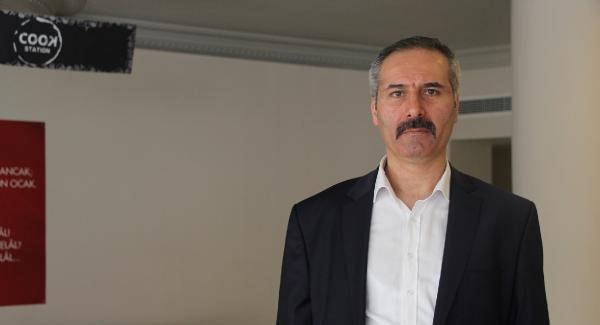
When we went to Şeyhülislam Hayri Efendi Primary School for our observation assignment, we met Aziz Zorlu there. Aziz Zorlu is a Psychological Counseling and Guidance Teacher. He is also a play therapist and he has lectures on clinical psychology at a private university. Sena İşçen and I talked about with the IEP challenging applications in Turkey. He told us how the plans were prepared and what he should pay attention to. He dwelled on the need to be realistic and progressive. He also emphasized that the students’ classroom teachers should learn to prepare IEP well and should work on it. He also suggested us some articles. From what I read in these articles, I made a summary of: When we look at special and inclusive education in Turkish education system within its historical development. In this brief history, the most important event is the publishing of Special Education Regulation (No. 573) in 1997. That is because it was the most comprehensive regulation about including children with special education needs (SEN) in mainstream schools. This regulation has many similarities with Education of All Handicapped Children Act published in the USA in 1975 (Kargın, 2004). It can be important to show how educational developments in the developed countries affect Turkish education system. There is a consensus in Turkey that teachers have students with SENs in their classrooms believe in usefulness of inclusive education, but they need to be supported by additional services such as resource room, counselling, teaching assistants, etc (Kargın, 2004). Unfortunately, the additional support services are being omitted and teachers in inclusive classrooms are alone with themselves without any additional support. Actually, the Ministry of National Education has highlighted the importance of inclusion and explained the components and principles of inclusion in official papers, but they do not match with realities in Turkish education system. In addition, the principles of inclusion are not clear regarding the duties of teachers and administrators in Turkey. Even though the number of students with SENs in regular school settings has begun to increase, there are still many of them who are not included. However, future is full of hope regarding to the advancements in inclusive education in Turkey. Last thing to say is that it is an important changing in people’s minds that in the past, disabled children did not even go outside and being disabled used to be considered something have to be ashamed of, but today, we argue the alternative places where they are educated. (Kutay, 2018)
 Special Kids